
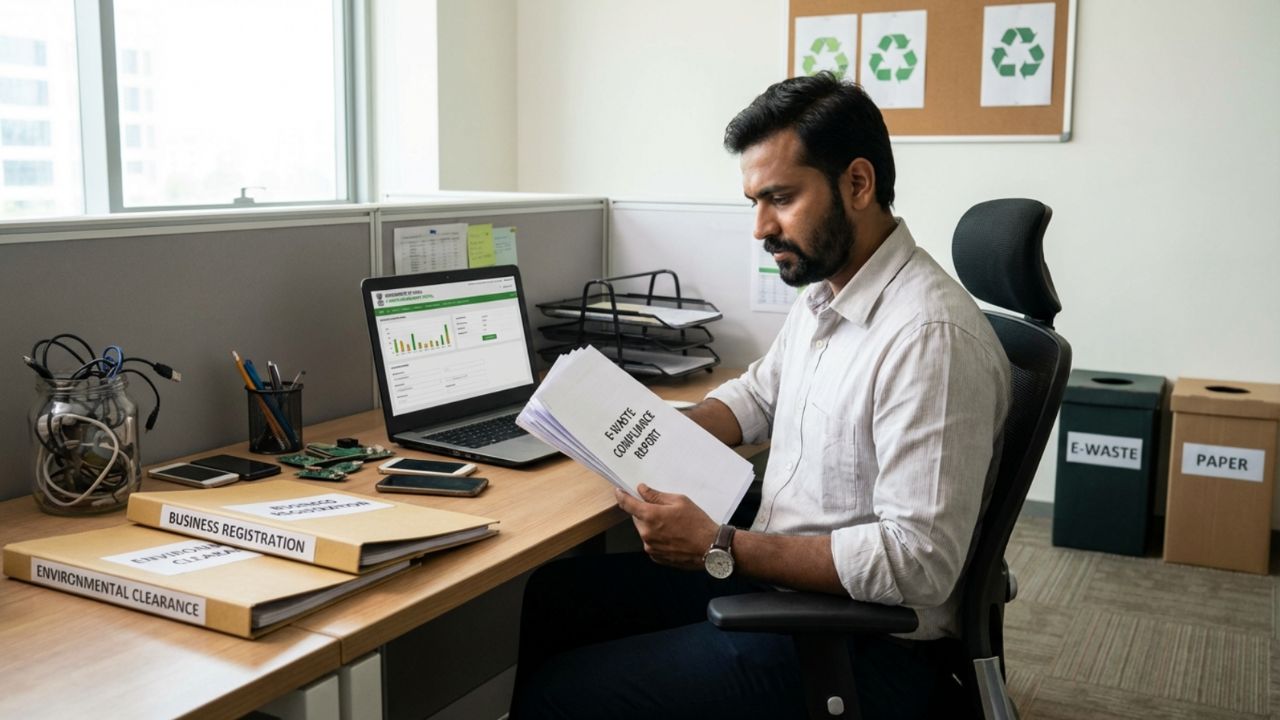
India’s growing electronics industry has led to a rapid increase in the generation of electronic waste. Devices such as smartphones, computers, televisions, and household appliances eventually become obsolete or non-functional, contributing to the country’s expanding e-waste stream. Proper management of this waste is essential to prevent environmental damage and ensure safe recycling practices.
To regulate the lifecycle of electronic products and their disposal, the Government of India implemented the E-Waste (Management) Rules, 2022. These rules introduced a structured framework based on Extended Producer Responsibility (EPR), which requires producers and other stakeholders to take responsibility for the waste generated from their products.

A key element of this regulatory system is the EPR Portal for E-Waste Management, operated by the Central Pollution Control Board (CPCB). Businesses involved in manufacturing, importing, recycling, or refurbishing electronic equipment must register on this portal. During the registration process, applicants are required to submit specific documents that verify their identity, operational capacity, and compliance with environmental regulations.
Table of Contents
Understanding the Role of Documentation in EPR Registration
Documentation plays an important role in the EPR registration process because it allows regulatory authorities to verify the legitimacy of the applicant and evaluate whether the business meets the requirements defined under environmental laws.
When a company submits an application on the CPCB portal, the uploaded documents help establish details about the business structure, product categories, operational facilities, and regulatory approvals. These documents ensure that the applicant is legally authorized to operate and capable of complying with e-waste management responsibilities.

The documentation requirements also help prevent unauthorized or unregulated entities from entering the formal e-waste management system. By verifying each application carefully, authorities can maintain transparency and accountability across the electronics supply chain.
Proper documentation therefore not only supports the registration process but also strengthens the overall regulatory framework for electronic waste management.
Basic Business Documents Required for Registration
All applicants registering on the CPCB EPR portal must submit basic business identification documents. These documents confirm the legal identity of the organization and allow authorities to verify that the business operates within the formal economy.

Common identification documents include registration certificates issued by government authorities, tax identification records, and proof of the company’s registered address. These records establish the legal status of the applicant and ensure that the entity can be held accountable under environmental regulations.
Applicants are also typically required to provide information about company directors, partners, or authorized signatories. This helps regulators identify responsible individuals who can be contacted for compliance-related matters.
Accurate submission of these documents is essential because inconsistencies between business records and application details may delay the registration process.
Product and Business Activity Details
In addition to general business identification records, applicants must provide detailed information about the electronic products or activities associated with their operations.
Producers and importers must submit information about the categories of electrical and electronic equipment they place in the market. This includes product types, brand names, and estimated quantities introduced into the market annually. These details help authorities determine the recycling obligations that producers must fulfill under the Extended Producer Responsibility framework.
Manufacturers must provide details about their production facilities, including information related to manufacturing capacity and waste generated during the production process. This allows regulators to assess whether the facility follows appropriate environmental management practices.
Providing accurate product and operational information ensures that regulatory authorities can assign appropriate responsibilities and monitor compliance effectively.
Environmental Compliance Documents
Businesses involved in electronics production, recycling, or refurbishment must demonstrate compliance with environmental regulations. For this reason, certain environmental authorization documents are required during the registration process.
Facilities that handle electronic waste must obtain approval from the relevant State Pollution Control Board (SPCB) or Pollution Control Committee (PCC). These approvals confirm that the facility follows environmental standards related to pollution control, waste handling, and industrial operations.
Environmental authorizations help ensure that companies involved in recycling or dismantling electronic waste operate safely and do not pose risks to surrounding communities. These documents are particularly important for recyclers and refurbishers, as they directly handle electronic waste materials.
Regulators review these authorizations carefully before granting EPR registration to ensure that operations comply with national environmental laws.
Authorization and Declaration Documents
The EPR registration process also requires applicants to submit declarations and authorization documents that confirm the accuracy of the information provided during the application process.
These documents typically include signed declarations stating that the applicant will comply with the provisions of the E-Waste (Management) Rules, 2022 and related environmental guidelines. The declarations also confirm that the information submitted on the portal is accurate and complete.
In many cases, the application must be submitted by an authorized representative of the company. Therefore, authorization letters or board resolutions may be required to confirm that the individual filing the application has the legal authority to represent the organization.
Such documentation strengthens accountability and ensures that companies understand their regulatory obligations before entering the e-waste management system.
Category-Specific Documents for Different Stakeholders
The CPCB portal requires different sets of documents depending on the category of stakeholder applying for registration. Each stakeholder type plays a unique role in the electronic waste management ecosystem.
The table below summarizes the general document requirements for different categories of applicants.
| Stakeholder Category | Examples of Required Documents |
|---|---|
| Producers / Importers | Business registration certificate, GST details, product information, authorization declarations |
| Manufacturers | Factory license, production facility details, environmental compliance approvals |
| Recyclers | Pollution control board authorization, recycling facility details, operational capacity information |
| Refurbishers | Refurbishment facility details, pollution control approvals, business registration documents |
Although these requirements may vary depending on the applicant’s operations, the goal is to ensure that each entity operating within the system meets regulatory and environmental standards.
Importance of Accurate and Complete Documentation
Submitting accurate documentation is critical for a successful EPR registration process. Incomplete or incorrect documents may result in delays, rejection of the application, or requests for additional clarification from regulatory authorities.
Businesses should carefully review all uploaded documents to ensure that they match the information entered in the online application form. Consistency across all records helps regulators verify the application more efficiently.
Maintaining proper documentation also helps companies prepare for future compliance audits. Regulatory authorities may review records related to production, recycling, or waste management to confirm that the company is meeting its obligations under the EPR system.
Therefore, businesses should treat documentation as an ongoing compliance requirement rather than a one-time registration task.
Preparing Documents for Smooth Registration
Businesses planning to register on the CPCB portal should organize their documents before starting the online application. This preparation can significantly reduce the time required to complete the registration process.
Companies should ensure that all required documents are valid, up to date, and issued by the appropriate authorities. Digital copies should be clear and properly formatted for upload through the online portal.
It is also helpful to verify that the information contained in these documents matches the details that will be entered into the application form. Consistent records make the verification process smoother and reduce the likelihood of delays.
By preparing documentation carefully in advance, businesses can complete the EPR registration process more efficiently and begin fulfilling their environmental responsibilities without unnecessary obstacles.