
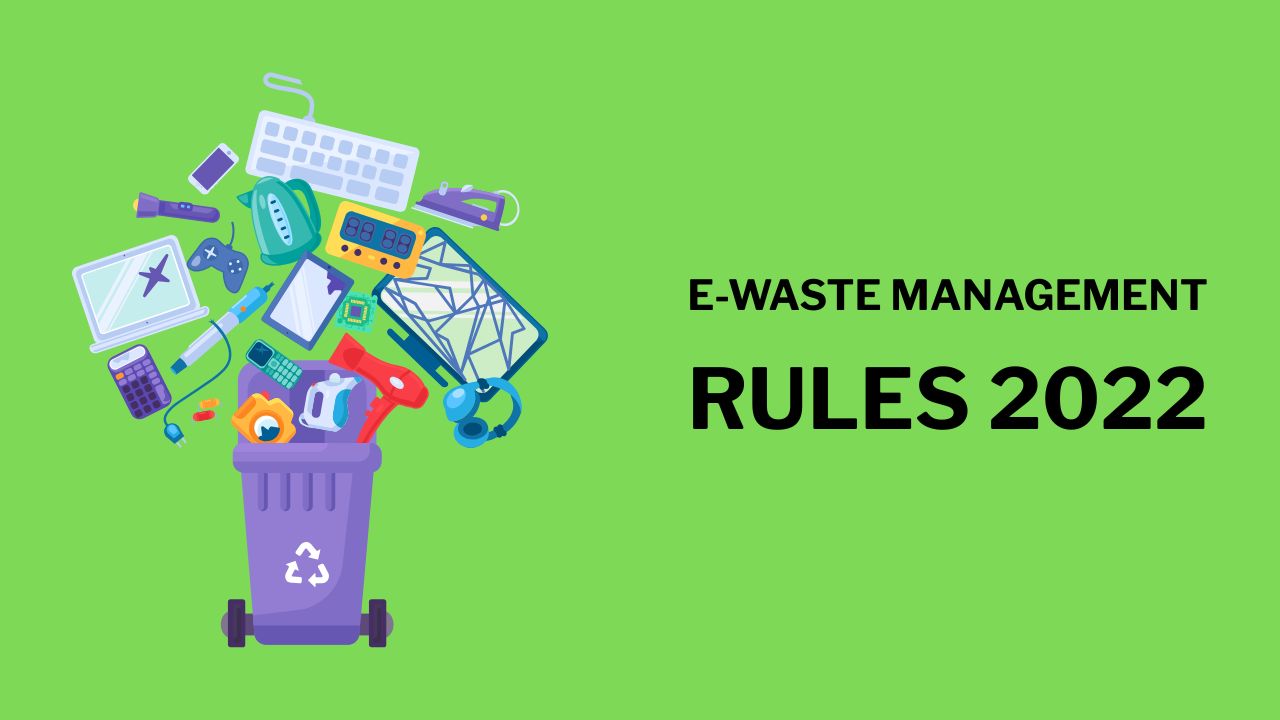
Electronic devices have become essential to modern life. Smartphones, computers, televisions, and many other electronic products are used daily in homes, businesses, and institutions. As the demand for technology increases, the amount of electronic waste generated after these products reach the end of their useful life is also rising rapidly across India.
Electronic waste, commonly known as e-waste, includes discarded electrical and electronic equipment. If this waste is not handled properly, it can release harmful substances such as lead, mercury, and cadmium into the environment. These materials can contaminate soil, water, and air, creating serious risks for both ecosystems and human health.

To address this growing environmental challenge, the Government of India introduced the E-Waste (Management) Rules 2022. These rules aim to regulate how electronic waste is collected, recycled, and disposed of, while also ensuring that producers take responsibility for managing waste generated from their products.
Table of Contents
What Are the E-Waste (Management) Rules 2022?
The E-Waste (Management) Rules 2022 are a set of regulations issued by the Ministry of Environment, Forest and Climate Change (MoEFCC) to improve the management and recycling of electronic waste in India. These rules replaced earlier e-waste regulations and introduced stronger mechanisms to ensure accountability and environmental protection.
The rules focus on creating a structured system where manufacturers, importers, recyclers, and other stakeholders participate in managing electronic waste responsibly. They also introduce a digital framework for monitoring waste collection and recycling activities.

One of the major changes introduced in the 2022 rules is the mandatory use of a centralized online EPR portal, which allows authorities to track compliance and monitor the recycling targets assigned to producers.
Why India Introduced the New E-Waste Rules
India is one of the largest producers of electronic waste in the world due to rapid urbanization, increasing digitalization, and rising consumer demand for electronic products. The lifespan of many electronic devices has also become shorter, which means they are replaced more frequently.
Improper disposal of electronic products often leads to informal recycling practices where waste is dismantled without proper safety measures. This can expose workers and nearby communities to hazardous substances and contribute to environmental pollution.

The E-Waste (Management) Rules 2022 were introduced to strengthen the regulatory framework and create a more organized recycling ecosystem. By making producers responsible for the waste generated by their products, the rules encourage sustainable production and responsible waste management.
Key Objectives of the E-Waste Management Rules
The primary goal of the E-Waste (Management) Rules 2022 is to ensure that electronic waste is handled in an environmentally safe and scientifically sound manner.
The rules aim to establish a formal system for collecting and recycling e-waste while reducing the environmental risks associated with improper disposal. They also promote resource recovery by encouraging the recycling of valuable materials such as metals and plastics found in electronic equipment.
Another important objective is to reduce the involvement of unregulated recycling activities. By bringing recycling operations into the formal sector and establishing clear compliance requirements, the rules help protect workers and communities from unsafe practices.
Overall, the regulations are designed to create a transparent and accountable framework for managing electronic waste across the country.
Extended Producer Responsibility Under the New Rules
A central feature of the E-Waste (Management) Rules 2022 is the concept of Extended Producer Responsibility (EPR). Under this policy, producers of electronic goods are responsible for ensuring that the waste generated from their products is properly recycled.
Producers include manufacturers, importers, and brand owners who introduce electronic products into the market. These companies must meet specific recycling targets based on the quantity of electronic products they sell.
To fulfill their obligations, producers must obtain recycling certificates from authorized recyclers. These certificates serve as proof that a certain amount of electronic waste has been processed and recycled according to environmental standards.
This approach ensures that producers remain accountable for the lifecycle of their products even after those products have been sold to consumers.
Stakeholders Covered Under the Rules
The E-Waste (Management) Rules 2022 apply to several stakeholders involved in the production, sale, repair, and recycling of electronic equipment. Each stakeholder has specific responsibilities within the waste management system.
The following table summarizes the major stakeholders and their roles under the rules.
| Stakeholder | Responsibility |
|---|---|
| Producers | Ensure collection and recycling of e-waste generated from their products |
| Manufacturers | Manage waste generated during the manufacturing process |
| Importers | Comply with EPR obligations for imported electronic products |
| Recyclers | Safely recycle electronic waste and recover valuable materials |
| Refurbishers | Extend the life of electronic products through repair and refurbishment |
| Bulk Consumers | Dispose of electronic waste through authorized channels |
This coordinated framework ensures that every stage of the electronic product lifecycle is regulated.
Role of the EPR Portal in Implementation
The E-Waste (Management) Rules 2022 introduced a digital platform known as the EPR Portal to simplify compliance and monitoring. This portal is managed by the Central Pollution Control Board (CPCB) and serves as the central database for all stakeholders involved in e-waste management.
Through the portal, producers and recyclers can register themselves and submit reports related to their activities. The portal also allows regulators to monitor recycling targets and verify whether companies are meeting their obligations.
The digital system improves transparency and reduces the chances of inaccurate reporting. It also enables authorities to track the movement of electronic waste and ensure that it is processed through authorized recycling facilities.
By using an online monitoring system, the government can maintain better control over e-waste management practices.
Compliance and Monitoring Mechanisms
The E-Waste (Management) Rules 2022 include strict compliance mechanisms to ensure that stakeholders follow environmental standards. Producers must submit regular reports detailing the quantity of electronic equipment they introduce into the market and the amount of waste they have recycled.
Recyclers must also report the amount of electronic waste they process and provide evidence of environmentally safe recycling practices. These reports are verified by regulatory authorities through the EPR portal.
If a producer fails to meet the assigned recycling targets, the authorities may impose environmental compensation charges or other regulatory actions. This enforcement mechanism encourages companies to take their responsibilities seriously.
Continuous monitoring and reporting help create a transparent system where waste management practices can be tracked and evaluated effectively.
Environmental and Economic Benefits of the Rules
The E-Waste (Management) Rules 2022 offer several environmental and economic benefits. By encouraging responsible recycling, the rules help prevent hazardous substances from entering the environment.
Electronic waste contains many valuable materials, including copper, gold, silver, and aluminum. When recycled properly, these materials can be recovered and reused in manufacturing, reducing the need for new raw material extraction.
The rules also support the growth of India’s formal recycling industry. As more electronic waste is processed through authorized facilities, the sector can generate employment opportunities while promoting sustainable business practices.
Additionally, improved waste management contributes to cleaner cities, reduced pollution, and better public health outcomes.