
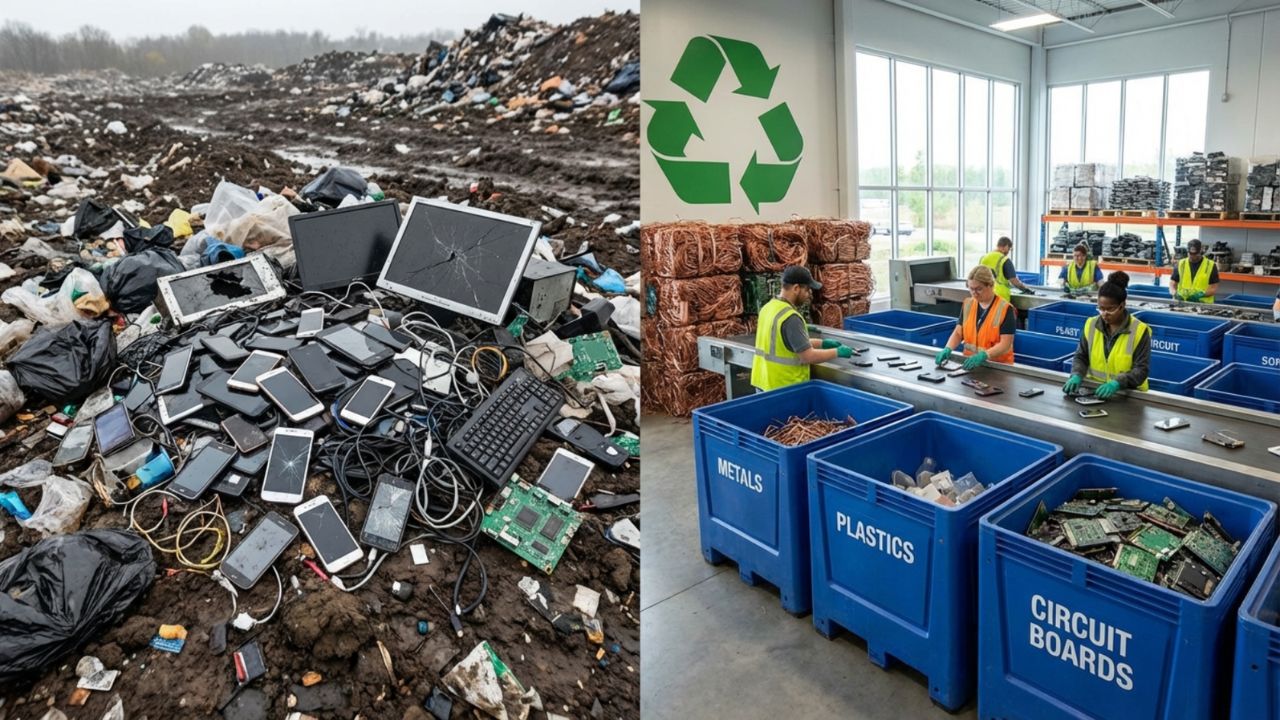
Electronic devices have become a central part of modern life. Smartphones, computers, televisions, printers, and many other electronic products support communication, business operations, healthcare, and education. As technology evolves quickly, people frequently replace old devices with newer models. This rapid consumption cycle has led to a significant increase in electronic waste, commonly referred to as e-waste.
Electronic waste includes discarded electrical and electronic equipment that is no longer functional or has become obsolete. Unlike ordinary household waste, e-waste contains a mixture of valuable metals, plastics, and hazardous chemicals. If these materials are not handled properly, they can contaminate the environment and pose serious health risks.

Because of these concerns, proper recycling and management of electronic waste have become critical environmental priorities. Governments around the world, including India, have introduced regulations and recycling systems to ensure that discarded electronics are processed safely and responsibly.
Table of Contents
Understanding What Electronic Waste Is
Electronic waste refers to any electrical or electronic device that has reached the end of its useful life and is discarded by users. These products range from small devices such as mobile phones and chargers to large appliances like refrigerators and washing machines.
Most electronic equipment contains complex components that combine metals, plastics, glass, and chemical compounds. Many of these materials are recyclable, but they require specialized treatment and processing methods. Improper disposal of such devices can release hazardous substances into the environment.

E-waste is one of the fastest-growing waste streams globally because technology is advancing rapidly and product lifespans are becoming shorter. Consumers and businesses often replace devices long before they completely stop functioning, which increases the amount of electronic waste generated each year.
Proper identification and classification of e-waste are important because these products must be handled through designated recycling systems rather than general waste disposal methods.
Hazardous Materials Found in Electronic Waste
Electronic products contain a variety of substances that can become harmful when released into the environment. These substances are often used during manufacturing to improve performance, durability, or safety of electronic components.

Many devices include heavy metals such as lead, mercury, cadmium, and chromium. These materials are used in circuit boards, batteries, and display screens. When electronics are improperly dismantled or disposed of in landfills, these substances can leach into soil and groundwater.
Electronic waste may also contain chemicals used in flame retardants and plastics. When burned or processed in uncontrolled conditions, these chemicals can release toxic gases into the air.
The presence of these hazardous materials is one of the main reasons why electronic waste must be handled through controlled recycling processes rather than informal disposal practices.
Environmental Damage Caused by Improper Disposal
Improper disposal of electronic waste can lead to widespread environmental pollution. When e-waste is dumped in landfills, rainwater can carry toxic substances from electronic components into nearby soil and groundwater systems.
Air pollution can also occur when electronic waste is burned to extract valuable metals. Informal recycling practices often involve burning wires or circuit boards to recover copper or other materials. These processes release harmful gases that can affect both the environment and human health.
Water contamination is another major concern. Toxic chemicals from electronic components can enter rivers, lakes, and groundwater sources. Once these substances reach water bodies, they may accumulate in plants and aquatic organisms, disrupting ecosystems.
Over time, uncontrolled e-waste disposal can create long-term environmental damage that is difficult and expensive to reverse.
Health Risks Associated With E-Waste Exposure
Improper handling of electronic waste does not only harm the environment; it can also affect human health. Workers involved in informal recycling activities are particularly vulnerable because they often dismantle devices without protective equipment.
Exposure to heavy metals such as lead and mercury can damage the nervous system, kidneys, and other vital organs. Inhaling toxic fumes released during burning or melting processes can lead to respiratory problems and long-term health complications.
Communities located near informal recycling sites may also be affected by contaminated air, soil, and water. Children are especially vulnerable because their bodies are still developing and they may be more sensitive to toxic substances.
Reducing these health risks requires the establishment of safe recycling systems that follow environmental and occupational safety standards.
Valuable Materials That Can Be Recovered From E-Waste
Although electronic waste presents environmental challenges, it also contains valuable materials that can be recovered through proper recycling. Many electronic devices contain metals such as copper, aluminum, silver, gold, and palladium.
Recycling these materials reduces the need for new mining activities, which can be environmentally destructive and resource-intensive. Recovering metals from electronic waste helps conserve natural resources and lowers the environmental impact associated with extracting raw materials.
Electronic waste also contains plastics and glass that can be reused in manufacturing processes. By recovering and reusing these materials, recycling facilities contribute to a more sustainable production cycle.
The recovery of valuable resources from electronic waste demonstrates that e-waste should be viewed not only as a disposal problem but also as a potential source of reusable materials.
Key Benefits of Proper E-Waste Recycling
Proper recycling of electronic waste provides several environmental and economic advantages. It helps reduce pollution, conserve resources, and support responsible waste management practices.
The following table highlights some of the major benefits of effective e-waste recycling systems.
| Benefit | Explanation |
|---|---|
| Pollution Reduction | Prevents hazardous materials from contaminating soil, water, and air |
| Resource Conservation | Recovers valuable metals and materials for reuse |
| Energy Savings | Recycling metals requires less energy than mining new resources |
| Job Creation | Supports the development of formal recycling industries |
| Environmental Protection | Reduces landfill waste and promotes sustainable production |
These benefits demonstrate why recycling electronic waste has become an important part of modern environmental policies.
Role of Governments and Regulations in E-Waste Management
Governments play a critical role in regulating electronic waste management through laws, monitoring systems, and environmental policies. Many countries have adopted regulatory frameworks that require producers and manufacturers to take responsibility for managing waste generated from their products.
In India, the E-Waste (Management) Rules 2022 established a system based on Extended Producer Responsibility (EPR). Under this framework, producers must ensure that electronic waste generated from their products is collected and recycled through authorized facilities.
Regulatory authorities such as the Central Pollution Control Board (CPCB) monitor compliance and ensure that businesses follow environmental guidelines. Digital systems like the EPR portal help track recycling activities and improve transparency within the e-waste management system.
Through these policies, governments aim to create organized recycling systems that protect the environment and promote sustainable waste management practices.
The Role of Consumers in Responsible E-Waste Disposal
While governments and businesses play important roles in e-waste management, consumers also contribute to the success of recycling systems. Responsible disposal practices by individuals can significantly reduce the environmental impact of electronic waste.
Consumers should avoid discarding electronic devices with regular household garbage. Instead, they can return used devices to authorized collection centers, retailer take-back programs, or recycling facilities.
Repairing or refurbishing electronic devices before replacing them can also extend product life and reduce waste generation. Reusing devices through donation or resale is another way to delay disposal and support sustainable consumption practices.
Public awareness and participation are essential for building effective electronic waste management systems.