
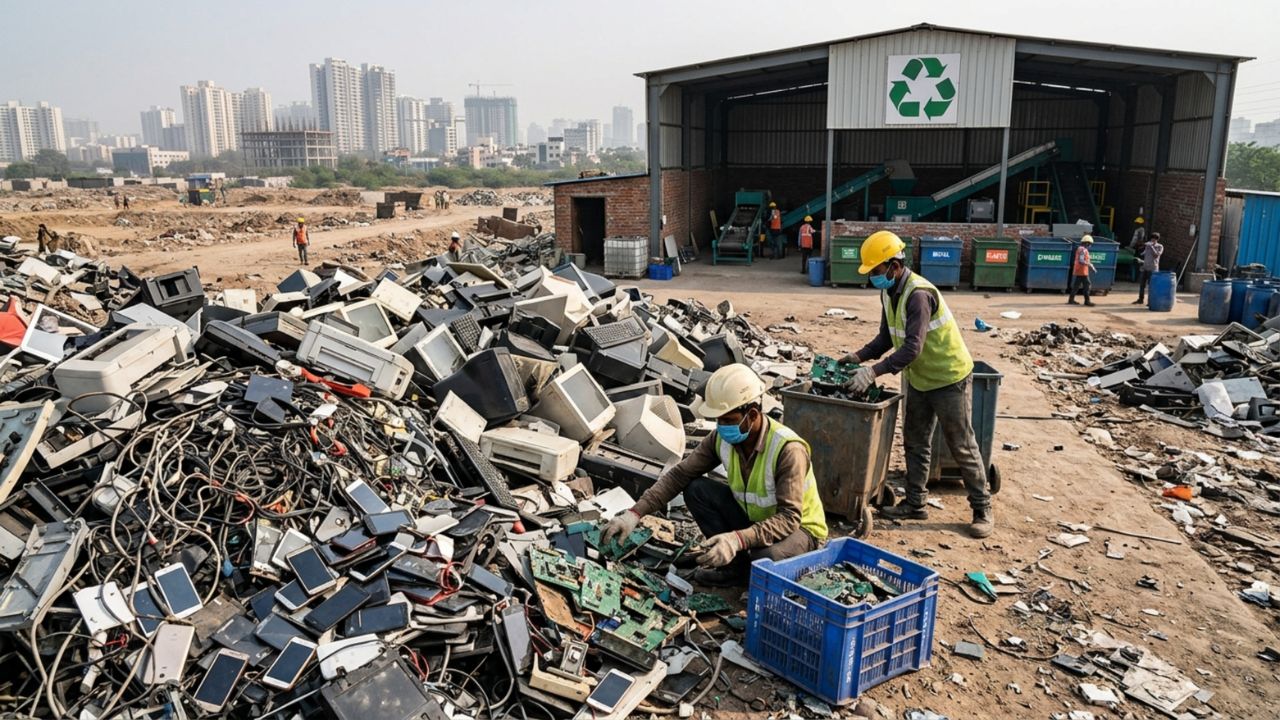
India has witnessed remarkable growth in the use of electronic devices over the past two decades. Smartphones, laptops, televisions, and other digital technologies have become essential tools for communication, education, and business. As technology becomes more affordable and accessible, the number of electronic products used by households and organizations continues to rise steadily.
While this technological expansion has improved productivity and connectivity, it has also created a major environmental challenge. Electronic products eventually reach the end of their useful life, and when they are discarded, they become electronic waste, commonly known as e-waste. Managing this waste is increasingly complex because electronic devices contain both valuable materials and hazardous substances.

India is now among the largest producers of e-waste globally. Without proper recycling and disposal systems, discarded electronics can lead to environmental pollution, health risks, and resource loss. Understanding the scale of the problem and identifying effective solutions has therefore become essential for building a sustainable technology ecosystem.
Table of Contents
Understanding the Scale of E-Waste Generation in India
Electronic waste is one of the fastest-growing waste streams in the country. Rapid technological innovation, increased consumer demand, and shorter product lifecycles have contributed to a steady rise in discarded electronic equipment.
Devices such as smartphones, computers, printers, batteries, and home appliances are replaced frequently as newer models become available. Many consumers upgrade their devices every few years, which significantly increases the volume of electronic products entering the waste stream.
Urbanization and digitalization have also contributed to this trend. Businesses, educational institutions, and government organizations rely heavily on electronic infrastructure, and large quantities of outdated equipment must eventually be replaced. As a result, electronic waste is generated not only by households but also by commercial and industrial sectors.
The growing scale of e-waste generation highlights the need for effective waste management systems that can safely collect, process, and recycle discarded electronic products.
Major Sources of Electronic Waste
Electronic waste in India originates from several sources, reflecting the widespread use of technology across different sectors of society. Household consumers represent a significant portion of e-waste generation because of the frequent replacement of personal devices such as mobile phones, laptops, and televisions.

Corporate offices and commercial establishments also contribute large volumes of electronic waste. Businesses often upgrade computer systems, networking equipment, and office electronics to maintain efficiency and security standards. These upgrades result in the disposal of outdated or obsolete devices.
Government departments, educational institutions, and healthcare facilities are additional contributors to the e-waste stream. These organizations rely on large numbers of electronic systems for daily operations, and the replacement of outdated equipment generates significant quantities of discarded electronics.
Understanding these sources helps policymakers and environmental agencies design collection systems that address the needs of different sectors.
Environmental Impact of Improper E-Waste Disposal
Improper disposal of electronic waste can cause serious environmental damage. Many electronic devices contain hazardous substances such as lead, mercury, cadmium, and brominated flame retardants. When discarded in landfills or dismantled using unsafe methods, these substances can contaminate soil, water, and air.
For example, heavy metals from electronic components may seep into groundwater through landfill leakage. This contamination can affect drinking water sources and agricultural land, leading to long-term environmental consequences.
Air pollution is another major concern. Informal recycling practices often involve burning wires and circuit boards to extract valuable metals. These processes release toxic gases that contribute to air pollution and pose health risks to nearby communities.
The environmental impact of uncontrolled e-waste disposal highlights the importance of regulated recycling and safe waste management practices.
Challenges in Managing Electronic Waste
Despite increasing awareness of e-waste issues, several challenges make effective waste management difficult. One major challenge is the presence of an extensive informal recycling sector. In many areas, electronic waste is collected and dismantled by small-scale operators who may lack the equipment and training required for safe recycling.
Another challenge is the limited awareness among consumers regarding proper disposal methods. Many people dispose of electronic devices along with household waste because they are unaware of authorized collection centers or recycling programs.
Infrastructure limitations also affect e-waste management. Establishing large-scale recycling facilities requires investment, technology, and regulatory oversight. In some regions, the availability of such facilities remains limited, which restricts the formal recycling capacity.
Addressing these challenges requires coordinated efforts from governments, industries, and consumers to strengthen the e-waste management ecosystem.
Government Policies and Regulatory Framework
The Indian government has introduced several policies to regulate electronic waste management and promote responsible recycling practices. The most important regulation is the E-Waste (Management) Rules, 2022, which established a structured framework for managing electronic waste across the country.
These rules are based on the concept of Extended Producer Responsibility (EPR). Under this framework, producers and manufacturers are responsible for ensuring that electronic waste generated from their products is collected and recycled through authorized facilities.
The regulatory framework also requires producers, recyclers, and refurbishers to register on the EPR portal managed by the Central Pollution Control Board (CPCB). This digital platform helps authorities track recycling activities, monitor compliance, and ensure that stakeholders fulfill their environmental obligations.
By introducing clear responsibilities and monitoring systems, the government aims to strengthen the formal e-waste recycling sector.
Possible Solutions for Managing the E-Waste Problem
Addressing the growing e-waste challenge requires a combination of technological, regulatory, and behavioral solutions. Several strategies can help reduce environmental risks and improve waste management efficiency.
One important approach is strengthening the formal recycling infrastructure. Establishing more authorized recycling facilities ensures that electronic waste can be processed safely and efficiently. Modern recycling technologies allow valuable materials such as copper, aluminum, gold, and plastics to be recovered from discarded electronics.
Public awareness campaigns can also play a crucial role. Educating consumers about the environmental risks of improper disposal and encouraging them to use authorized collection centers can significantly improve waste management outcomes.
In addition, companies can adopt sustainable product design practices that make electronic devices easier to repair, upgrade, and recycle. Extending product lifecycles reduces the volume of waste generated and promotes resource conservation.
Key Strategies to Improve E-Waste Management
The following table summarizes several strategies that can help address the e-waste problem in India.
| Strategy | Description |
|---|---|
| Strengthening Recycling Infrastructure | Expanding authorized recycling facilities across the country |
| Consumer Awareness Programs | Educating citizens about safe disposal and recycling methods |
| Extended Producer Responsibility | Ensuring producers manage waste generated from their products |
| Technological Innovation | Using advanced recycling technologies for material recovery |
| Sustainable Product Design | Designing electronics that are easier to repair and recycle |
These strategies collectively support a more organized and environmentally responsible approach to managing electronic waste.
Role of Businesses and Consumers in the Solution
Effective e-waste management requires participation from both businesses and consumers. Companies involved in manufacturing or distributing electronic products must follow environmental regulations and collaborate with authorized recyclers.
Businesses can also contribute by implementing take-back programs that allow consumers to return old devices for recycling. These programs make it easier for customers to dispose of electronic products responsibly.
Consumers also play an important role in reducing e-waste. By repairing devices, extending product lifecycles, and using authorized recycling services, individuals can reduce the environmental impact of electronic waste.
Collective action from industry, government, and society is essential for building a sustainable electronics ecosystem.