
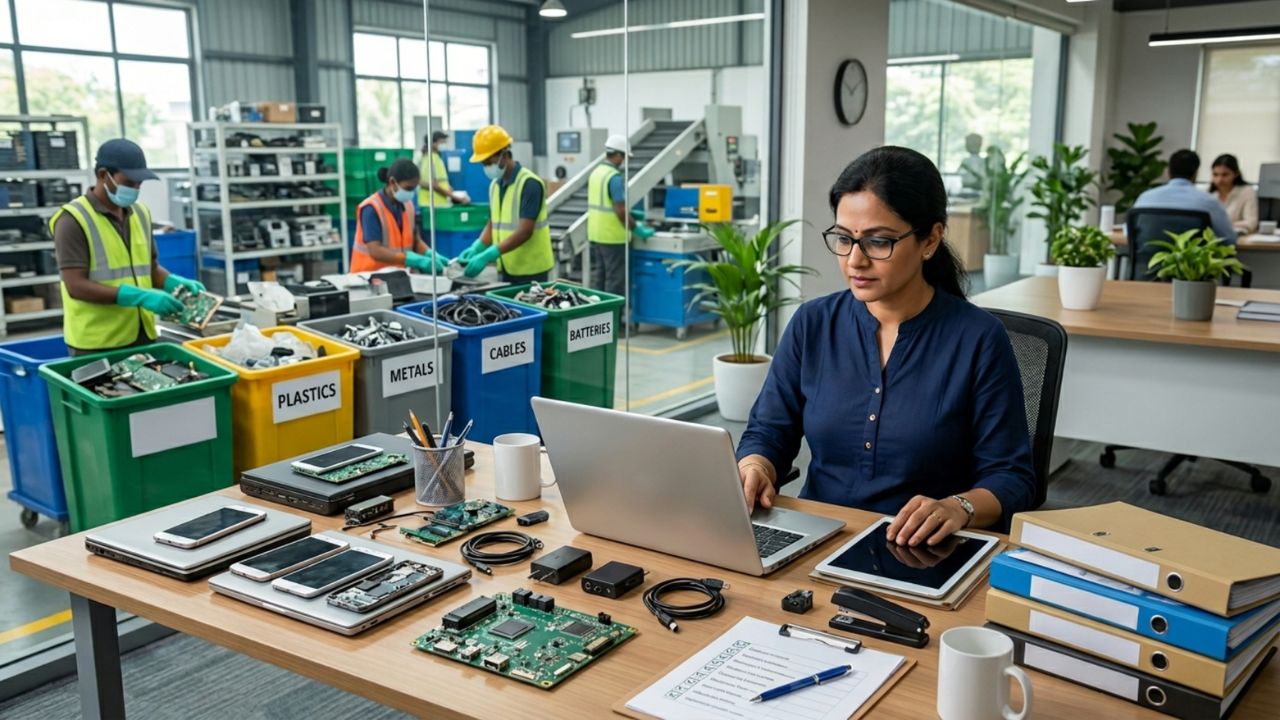
The rapid growth of electronics manufacturing, imports, and consumption in India has significantly increased the amount of electronic waste generated each year. Products such as smartphones, computers, networking devices, televisions, and household appliances eventually reach the end of their lifecycle and must be properly managed. Because electronic waste contains both valuable resources and hazardous materials, governments have introduced regulations to ensure it is handled safely.
India regulates electronic waste through the E-Waste (Management) Rules, 2022, which came into force in April 2023. These rules are designed to ensure environmentally sound recycling and responsible management of electronic products after they become waste. The regulations introduced a stronger Extended Producer Responsibility (EPR) framework that places accountability on producers and other stakeholders involved in the lifecycle of electronic products.

For businesses operating in electronics manufacturing, distribution, refurbishment, or recycling, compliance with these regulations is essential. Companies must follow specific procedures, register on government portals, maintain records, and work with authorized recyclers. Understanding these requirements helps organizations avoid penalties while supporting sustainable waste management practices.
Table of Contents
Understanding India’s E-Waste Regulatory Framework
The E-Waste (Management) Rules, 2022 form the core regulatory framework governing electronic waste in India. These rules replaced earlier regulations and strengthened the compliance system by introducing digital monitoring, improved recycling targets, and stricter responsibilities for producers and other stakeholders.
The rules apply to several types of entities involved in the electronics lifecycle, including manufacturers, producers, recyclers, refurbishers, and importers of electrical and electronic equipment. The framework ensures that electronic waste is collected, transported, dismantled, and recycled through environmentally sound methods rather than informal disposal systems.

A major goal of the rules is to shift responsibility toward the companies that introduce electronic products into the market. Through the Extended Producer Responsibility system, businesses must ensure that electronic products they sell are eventually collected and recycled through authorized channels.
Registering on the CPCB EPR Portal
One of the most important steps for businesses to remain compliant is registration on the EPR portal developed by the Central Pollution Control Board (CPCB). The rules clearly state that manufacturers, producers, refurbishers, and recyclers must register on this portal before carrying out activities related to electrical and electronic equipment.
The portal acts as a centralized platform where businesses submit applications, maintain compliance records, and report recycling activities. Registration also allows the government to track the quantity of electronic products introduced into the market and monitor whether companies are meeting their recycling obligations.

Operating without registration is not permitted under the rules, and companies are also restricted from conducting business with unregistered entities. This ensures that all participants in the e-waste ecosystem operate within a regulated and transparent framework.
Meeting Extended Producer Responsibility (EPR) Obligations
Extended Producer Responsibility is the cornerstone of India’s e-waste management system. Under the EPR framework, producers are responsible for managing the waste generated from the electronic products they place in the market.
Businesses must collect electronic waste in line with the recycling targets assigned to them. These targets are typically calculated based on the quantity and categories of electronic products sold in previous years.
To meet these obligations, producers may establish take-back systems, collaborate with authorized recyclers, or work through producer responsibility organizations that help manage collection and recycling processes. This ensures that electronic products are recovered and recycled through scientifically approved methods rather than informal waste handling practices.
Working With Authorized Recyclers and Refurbishers
Another important requirement for compliance is partnering with authorized recyclers and refurbishers. The e-waste rules emphasize that recycling must be conducted through facilities approved by environmental authorities.
Authorized recyclers process discarded electronic equipment using specialized technology that allows them to recover metals, plastics, and other materials safely. These facilities are required to follow environmental standards and maintain records of the quantity of waste processed.
By collaborating with registered recycling partners, businesses ensure that electronic waste generated from their products is handled responsibly. This partnership also supports the development of a formal recycling industry, which is essential for improving India’s overall e-waste management system.
Maintaining Records and Submitting Compliance Reports
Compliance with e-waste regulations also involves regular reporting and documentation. Businesses must maintain records related to the electronic products they manufacture, import, or sell, including details about product categories and quantities placed in the market.
Companies are also required to submit periodic reports on the EPR portal. These reports may include information about sales volumes, waste collection activities, recycling certificates, and fulfillment of EPR obligations.
Maintaining accurate documentation is essential because regulatory authorities may review these records during inspections or audits. Transparent reporting helps ensure accountability and allows regulators to evaluate whether businesses are meeting their environmental responsibilities.
Establishing E-Waste Collection and Take-Back Systems
Businesses can improve compliance by establishing effective e-waste collection mechanisms. Many electronics companies operate take-back programs, where consumers can return old devices when purchasing new products or through designated collection centers.
Such systems help companies meet their recycling obligations while also encouraging responsible disposal practices among consumers. Retailers, service centers, and logistics partners may participate in these collection networks to make it easier for consumers to return end-of-life electronics.
Efficient collection infrastructure is particularly important in large markets like India, where electronic devices are widely distributed across urban and rural areas. Proper collection systems ensure that electronic waste enters the formal recycling chain rather than being processed through informal or unsafe methods.
Training Employees and Strengthening Environmental Policies
Corporate compliance with e-waste regulations also depends on internal awareness and organizational practices. Companies should train employees about environmental responsibilities, regulatory requirements, and proper waste management procedures.
Environmental compliance teams often oversee regulatory reporting, recycling partnerships, and internal monitoring processes. By integrating e-waste management policies into corporate sustainability strategies, businesses can ensure long-term compliance and reduce environmental risks.
Many organizations also conduct internal audits to verify that operational practices align with regulatory standards. These audits help identify gaps in compliance and allow companies to address issues before they lead to regulatory penalties.
Benefits of Compliance With E-Waste Regulations
While regulatory compliance is mandatory, it also offers several strategic advantages for businesses. Companies that follow e-waste rules demonstrate environmental responsibility and strengthen their reputation among consumers, investors, and regulators.
Compliance also supports resource efficiency because recycling processes recover valuable materials from discarded electronics. These recovered resources can re-enter manufacturing supply chains, reducing the need for raw material extraction.
Furthermore, adherence to environmental regulations reduces the risk of penalties, operational disruptions, and legal disputes. Businesses that establish strong compliance systems are better prepared to adapt to future environmental policies and sustainability standards.